If you had told me a few years ago, that I would be spooning creatine into my breakfast every morning, I’d probably have laughed!
To me, creatine was something for gym guys – people like my husband and his friends. Definitely not for women like me.
Fast forward to now and here I am, scooping 2 generous spoonfuls of it into my Greek yogurt. It completely part of my morning routine.
Now I’ll be honest, I don’t feel any dramatic difference. But I take it for long term benefits, especially for keeping my brain healthy. I do know others who have said they do actually feel better using it.
A few months ago, I overheard a conversation between a friend and her husband. He was trying to convince her to take creatine too.
She sneered: ‘that’s for bodybuilders, I’m not taking it!’
I smiled, because I had been there myself. But actually, there is some really interesting science behind why creatine might be a game changer for women in their 40s and beyond.
So, what is creatine, really?
Creatine is a compound naturally found in our muscles and brain. Our bodies make it from amino acids, but we also get it from food – mainly meat and fish. It is stored in our muscles as ‘phosphocreatine’ which act as a quick energy reserve during exercise or intense brain work. As we age, our natural stores decline and if, like me, you’re a vegetarian, your levels might be even lower. But even for those who do consume quite a lot of meat, you would need to eat about a 1kg of steak to get around 5g of creatine. Not something most of us are doing!
My personal motivation for starting taking creatine was brain health. With my mum’s Alzheimer’s diagnosis, I’ve become more aware of anything that might protect cognitive function. Research shows that higher creatine levels can help with mental fatigue, focus and brain energy metabolism. This is particularly interesting for women around perimenopause. As estrogen levels drop, our brains become less efficient at using glucose for energy and we need to find alternative energy sources. Creatine can help fill that gap.
When I first started about a year ago, I took 3g a day. The standard amount often recommended for muscle support. Over time and after reading more and speaking to friends, I gradually increased to around 12g a day. The idea is, that while 3g is supports muscles, higher doses may help ‘saturate’ our brain, which could make a difference for mental energy and focus. That said, everyone is different, so if you are on a creatine journey too, do what feels right for you, start slow and listen to your body. And when in doubt check with a healthcare professional or dietician.
Since ‘studying’ creatine, I have learned a bit about the pros and cons. Luckily its mostly pros:
- Helps maintain muscle mass & strength, which naturally decline after our 40s
- Supports brain energy and focus during perimenopause
- Can reduce fatigue and supports exercise recovery
- Easy to take, just mix into yogurt, smoothies, juice etc. Some say they put it in their coffee! I haven’t tried that myself
The downside
- In some individuals it can cause bloating or water retention at first. It usually passes, but some stop taking it because of this
- Needs to be taken regularly to work, it’s not a quick fix.
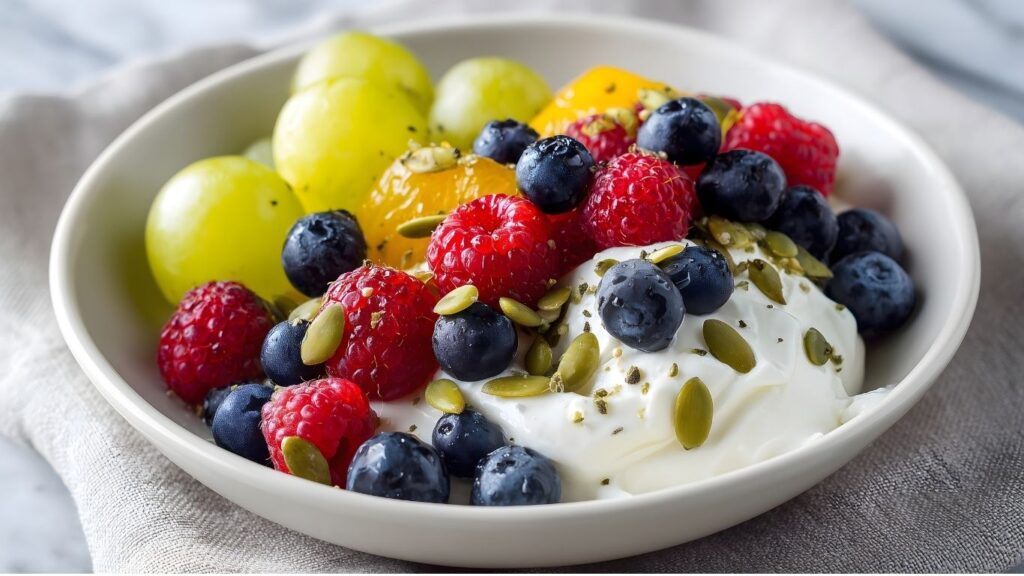
Each morning, I add creatine monohydrate to my yogurt, usually plain (high fat!) Greek yogurt, with (defrosted mixed) berries, a mix of seeds and some local honey. Creatine doesn’t taste of anything, and it feels good to start the day with such a little health boost.
What I know now is that creatine isn’t just for men or athletes. Its for any woman who wants to stay strong, sharp and energised through midlife and beyond. It is one of those small, evidence based habits that might make a big difference over time.
So if, like me, you had dismissed creatine as ‘not for me’, maybe have another look. And if you are already taking it, I’d love to hear how you’re getting on!
Hasta pronto,
 x
x